The struggle to halt nuclear weapons testing—above ground until 1963, below ground after that —has been a continuing objective of the disarmament movement, and has produced significant successes.
For more than thirty years, from the mid-1990s through the mid-2020s, a de facto nuclear test ban existed between the United States and Russia. The testing moratorium was the result of citizen activism and legislative pressures that emerged from the nuclear weapons freeze movement.
The de factor test ban was threatened in the fall of 2025 by Trump’s ill-considered, misinformed proposal for the U.S. to “test nuclear weapons as other countries do.”
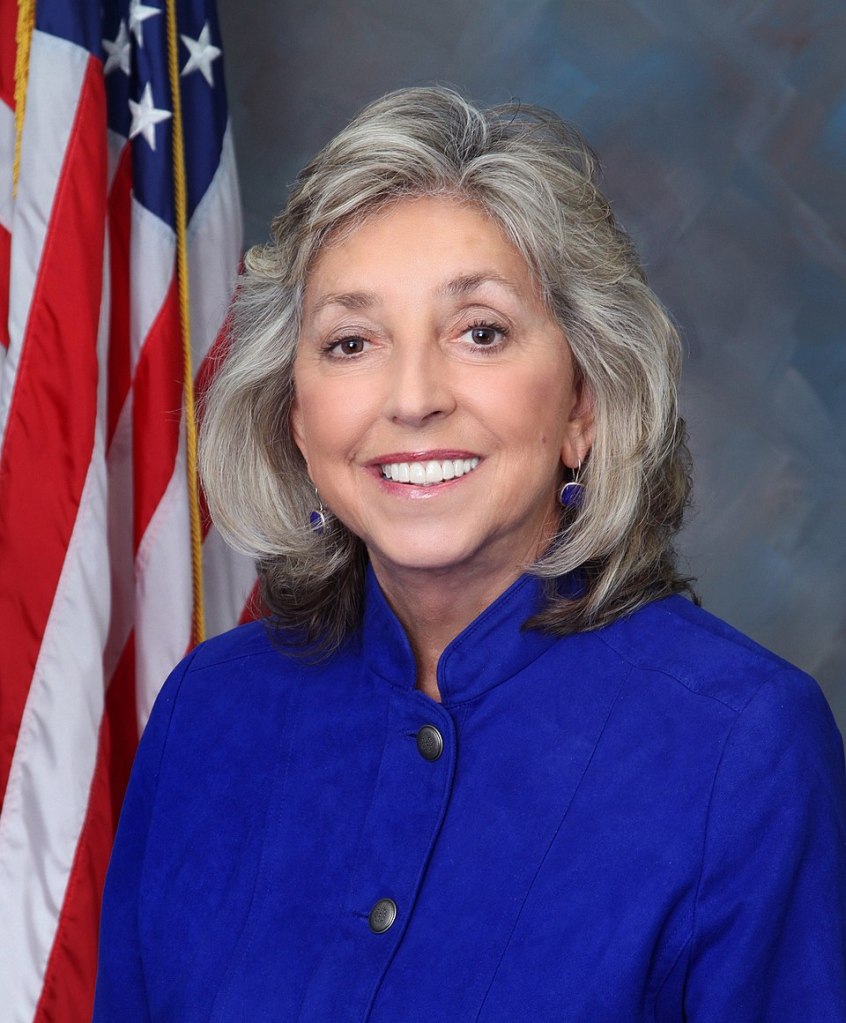
The reaction to the idea of renewed nuclear testing was swift. The Arms Control Association, Win Without War and other groups condemned the proposal. In the state of Nevada, where the U.S. nuclear test site is located, virtually every local elected official opposed the resumption of underground nuclear detonations. Rep. Dina Titus (D-NV) and other members of Congress introduced legislation to prevent renewed nuclear testing.
SANE was created in late 1950s to halt the arms race and prevent nuclear testing. Radioactive fallout from atomic testing was a major concern at the time, with Strontium 90 accumulating in the teeth and bones of children.
Members of Women’s Strike for Peace marched in front of the White House in the early 1960s, some pushing baby carriages to symbolize the urgency of protecting infants.
These protests and lobbying efforts led to the signing of the 1963 Partial Test Ban Treaty, which ended atmospheric testing.
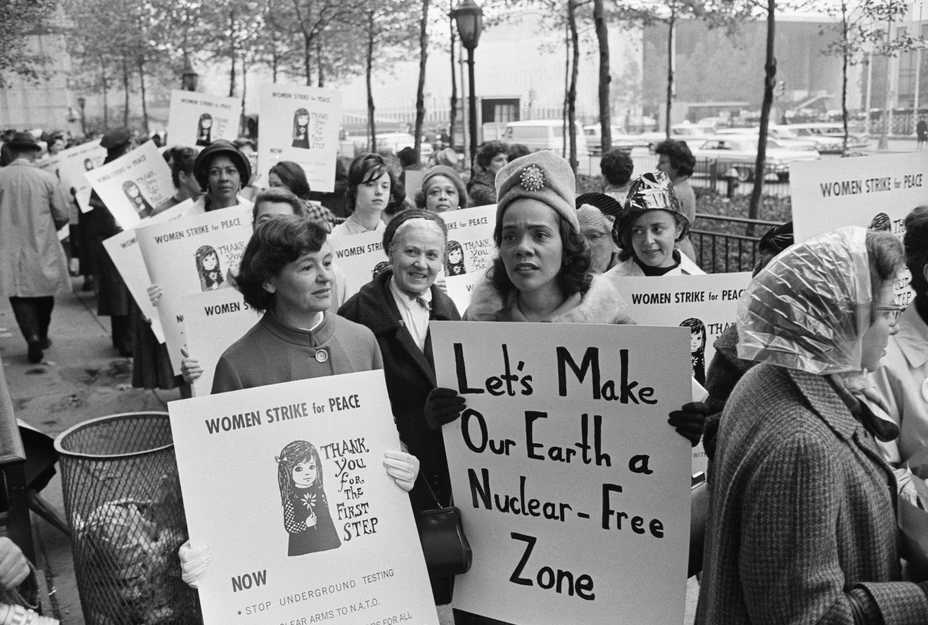
Coretta Scott King with Women Strike for Peace, picketing the United Nations headquarters in New York City on Nov. 1, 1963
SANE Co-chair Norman Cousins served an intermediary between President John F. Kennedy and Soviet Premier Nikita Khrushchev in securing the treaty.
Testing continued underground, however, and accelerated as the arms race intensified in the 1970s and 80s. The nuclear freeze proposition called for a halt to testing as the first step in stopping the production and deployment of nuclear weapons. Banning nuclear testing became a primary focus of many freeze activists.
Nuclear Test Ban Campaign
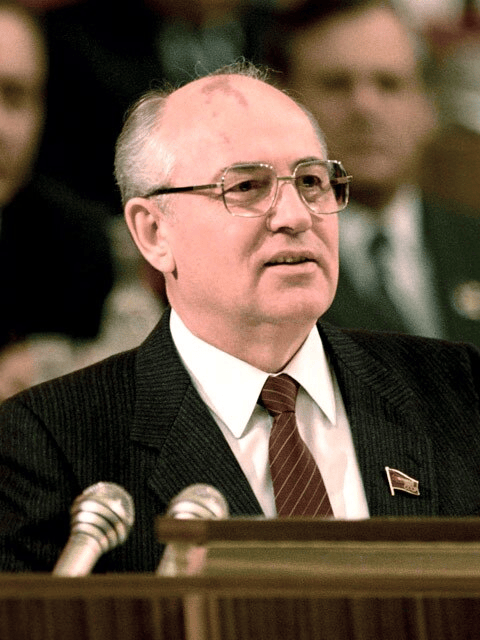
The call for a test ban received a major boost in August 1985 when Soviet leader Mikhail Gorbachev commemorated the 40th anniversary of the bombing of Hiroshima by announcing a unilateral Soviet moratorium on nuclear weapons testing.
SANE and the Freeze Campaign jumped on the issue and called for the U.S. to reciprocate the Soviet moratorium. We launched a nationwide petition for a bilateral U.S. and Soviet testing moratorium that gained more than a million signatures in just three months, an impressive accomplishment in pre-Internet days.
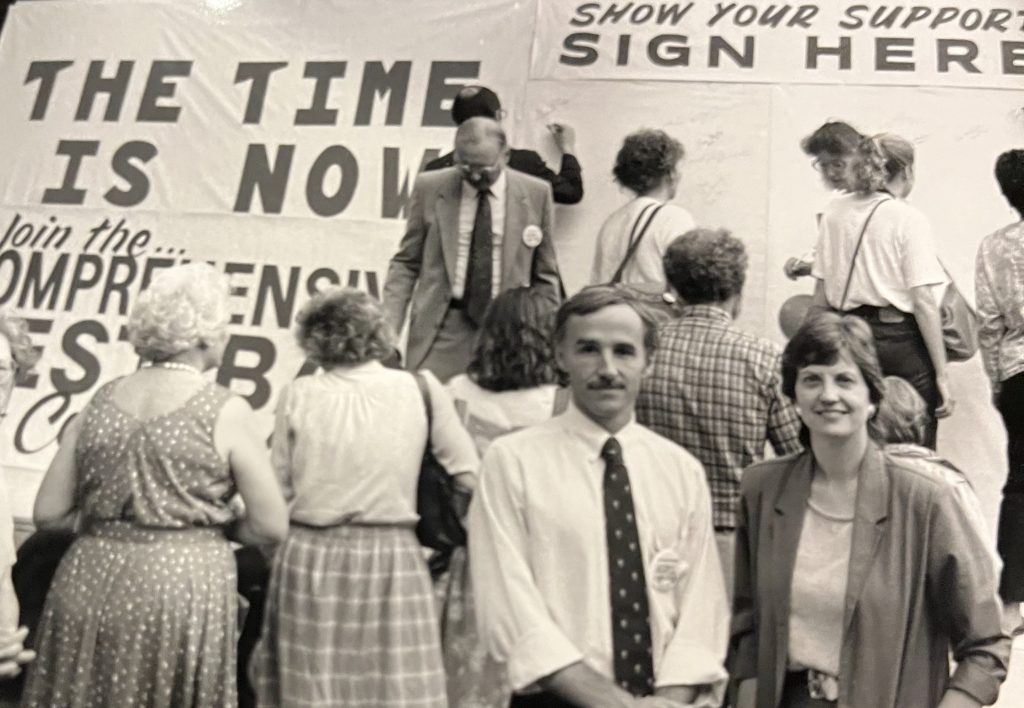
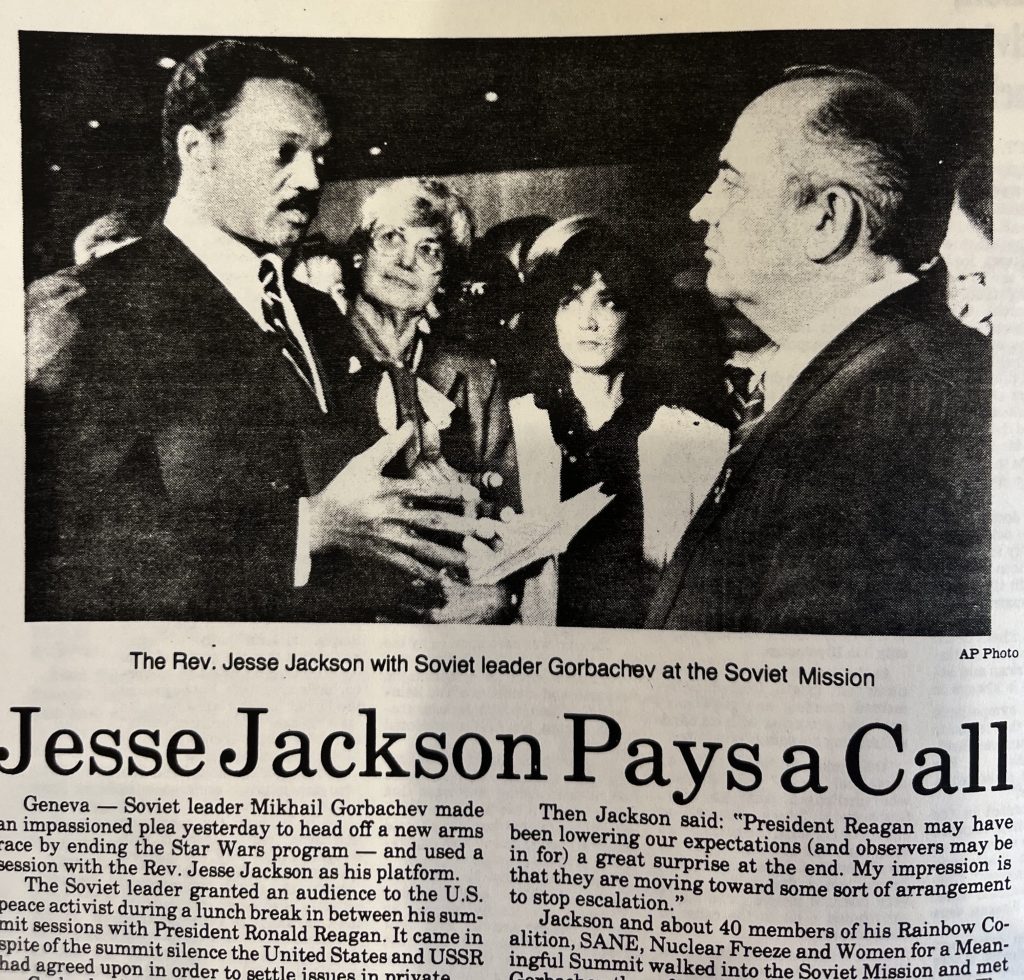
Rev. Jesse Jackson led a delegation of activists from SANE, the Freeze Campaign and other U.S. and European peace groups at the Reagan-Gorbachev summit in Geneva in 1985. We delivered boxes of signed petitions in person to Gorbachev at the Soviet embassy. Reagan did not agree to meet with us.
The test ban also became a legislative priority. Rep. Ed Markey (D-MA) developed the concept of a “legislative reciprocal arms control initiative,” an independent act of U.S. nuclear restraint if the Soviet Union reciprocated in a verifiable manner. His 1986 amendment to suspend the funding of U.S. nuclear test explosions swept through the House by a vote of 234 to 155 but was blocked in the Senate.
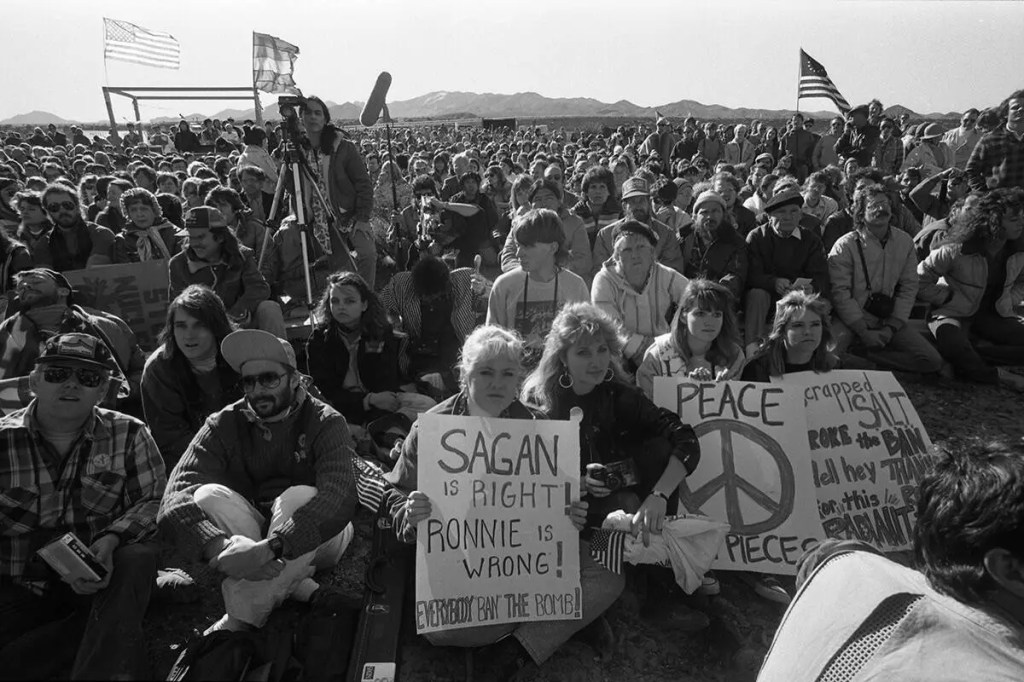
A new organization emerged from the freeze movement, American Peace Test, which focused on mobilizing grassroots pressure for a test ban. The group organized mass demonstrations and nonviolent civil disobedience at the Nevada Test Site near Las Vegas. During protests at the site from 1985 through 1988, more than 13,000 people were arrested, including celebrities such as Carl Sagan and Casey Kasem and religious leaders such as William Sloane Coffin, Jr. and Jim Wallis. I was also arrested at the site, along with Freeze Campaign director Jane Gruenebaum.
Legislative action continued. In 1987 and 1988 the House of Representatives again approved measures cutting funds for nuclear weapons testing, although the Senate failed to go along. As grassroots pressure continued, the Senate finally approved a testing moratorium in 1992 that included a mandate for negotiations to achieve a Comprehensive Test Ban Treaty. The measure passed by a lopsided 68-26 vote. For the first time both houses of Congress approved legislation to halt funding for nuclear testing. President George H.W. Bush opposed the measure but was unable to stop it. That was the end of U.S. nuclear explosions.
 David Cortright
You must be logged in to post a comment.