The MX missile program was a monstrosity, the largest and most dangerous element of the nuclear buildup of the 1970s and 80s. The plan called for producing 200 new mobile Intercontinental Ballistic Missiles (ICBMs), each designed to carry ten nuclear warheads, deployed in a massive mobile basing system in the Great Basin of Utah and Nevada that would have covered 25,000 square miles, five times the size of Connecticut. To avoid being targeted, the missiles were to be shuttled among 4,600 shelters in a hide-and-seek nuclear shell game.
The missile program was politically vulnerable because of the dangers it posed to international security and because of its massive cost and environmental footprint.
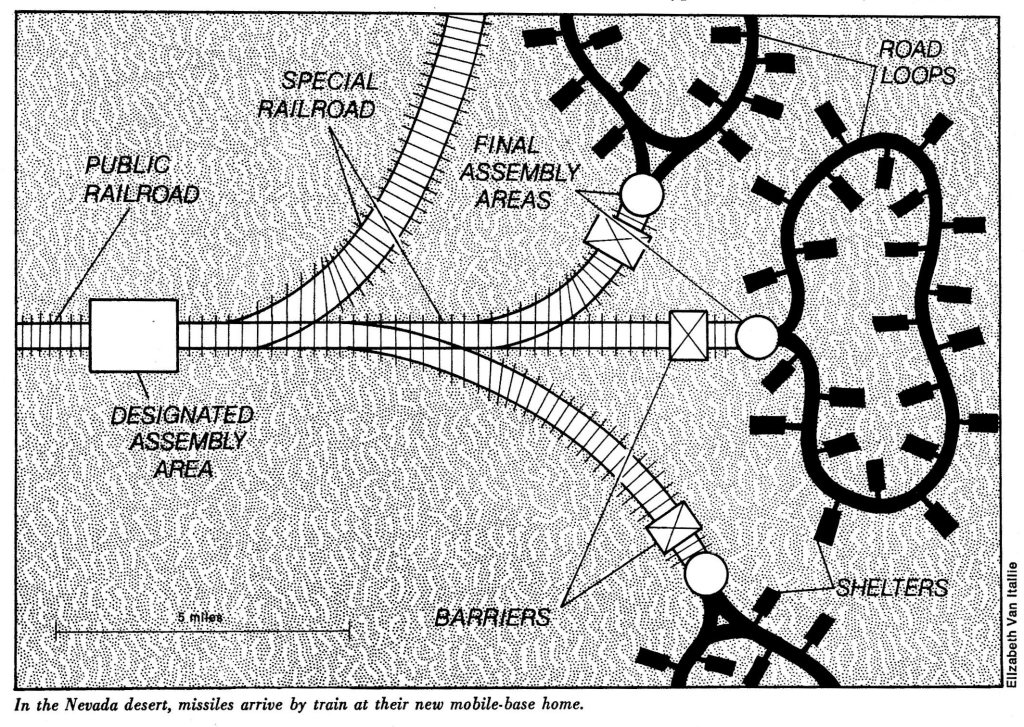
A portion of the MX Basing Plan
The MX was low hanging fruit, a Rube Goldberg scheme that was ripe for attack and might collapse of its own weight, especially if given a push by a well-organized citizen lobby.
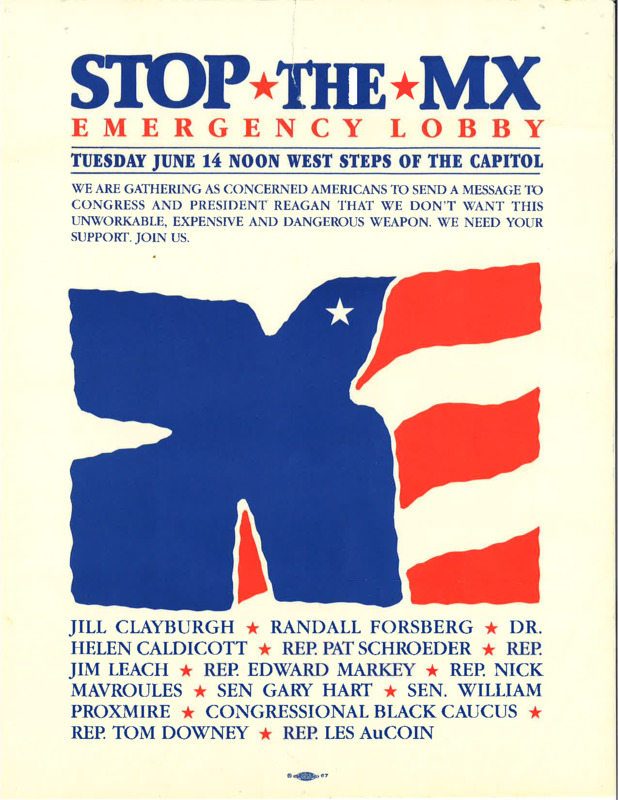
SANE and other groups made stopping the new missile a priority, creating the National Campaign to Stop the MX. Beginning in 1979 and continuing through 1985, the MX campaign was successful at minimizing one of the most dangerous parts of the nuclear buildup.
Some in the broader disarmament movement questioned the value of campaigning against a single weapons system rather than challenging the entire nuclear buildup. The point of the freeze proposition was precisely to halt the development of all nuclear weapons, not just a single weapon. There was no contradiction between the two efforts, however. SANE and other groups in the Stop MX coalition also supported the nuclear freeze. The MX campaign was a way of focusing pressure on a particularly dangerous part of the nuclear buildup.
Effective Coalition Building
The struggle against the MX basing plan featured a unique, diverse coalition of peace, environmental and religious groups, rancher and farmer interests, and native American communities. The National Taxpayers Union and the International Association of Machinists also joined the fray. It was an effective combination of unusual allies who disagreed on many things but were united in stopping the menacing missile system.
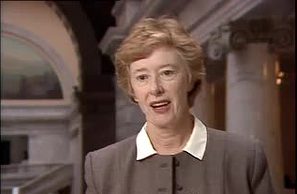
One of the leading voices locally was Utah State Senator Frances Farley, a tireless opponent of the MX who worked with many others to stop what she considered an insane and destructive program.
Local and national groups brought independent nuclear policy experts to the region to brief leaders of the influential Church of Latter-Day Saints. At Christmas in 1980 the Church issued a statement expressing biblical concern about the “unrestricted building of arsenals of war.” In May 1981 the Church excoriated the construction of a “mammoth weapons system potentially capable of destroying much of civilization” and pleaded with national leaders to find viable alternatives. This rejection of the MX by the Mormon leadership was a decisive blow that convinced the Reagan administration to cancel the mobile basing system in October 1981.
Grassroots-based lobbying
After the defeat of the mobile basing plan, the campaign shifted its focus to a protracted lobbying effort against the MX missile itself. Grassroots pressure on targeted members of Congress was key to this success. Tens of thousands of citizens in selected congressional districts organized locally and sent phone calls to legislators as they voted on legislation to cut funding for the program.
The power of the legislative lobby against the MX had the unintended serendipitous effect of motivating congressional efforts to demand progress in arms control negotiations. This pressure prompted the White House to adopt more flexible terms at the bargaining table.
 David Cortright
You must be logged in to post a comment.