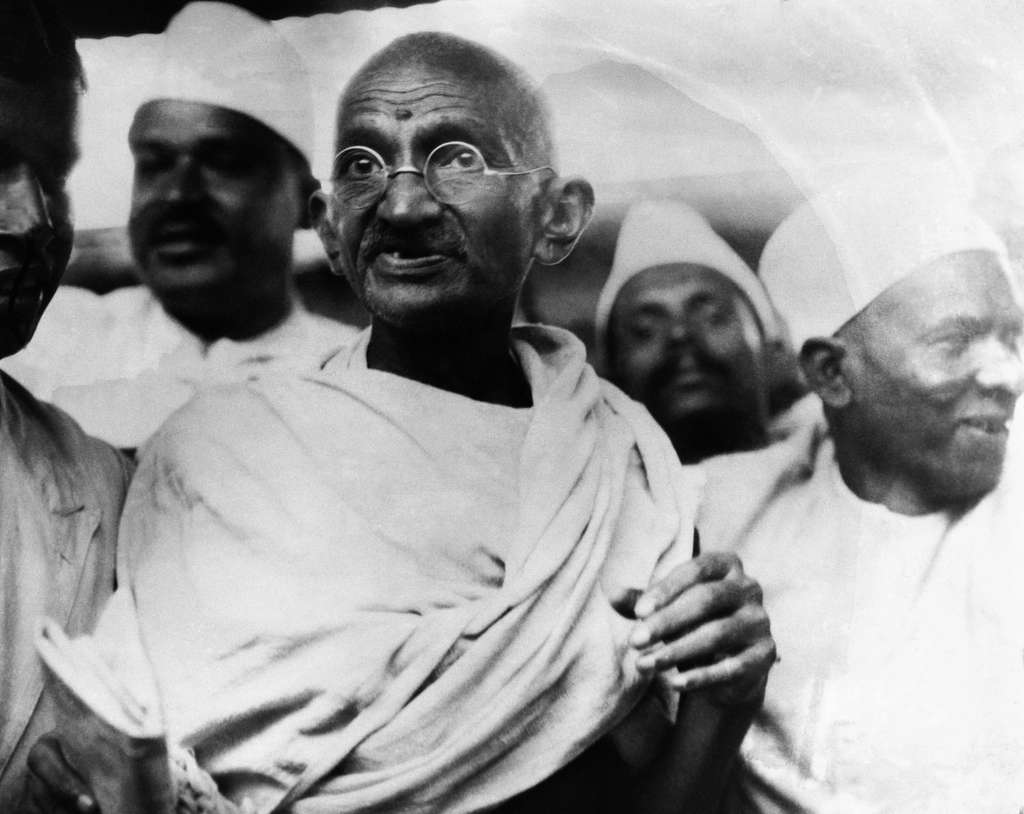
Gandhi emphasized the power of nonviolent resistance and said his method of satyagraha was superior to violent means and the use of military force. Late in life, when he learned about Hiroshima, he said nonviolent action was more powerful than the atomic bomb.
Dr. King also spoke of the power of nonviolent action. He disagreed with those who urged the use of violence and insisted that nonviolent action was the only viable means of ending racial segregation.
When Gandhi and King made these statements, they were relying on experience and what they knew of history, but they did not have proof. That became available in the 2000s with groundbreaking research of Erica Chenoweth and Maria Stephan. We now have solid empirical evidence confirming that nonviolent civil resistance is more effective than violent means–in fact is twice as effective as the use of force.


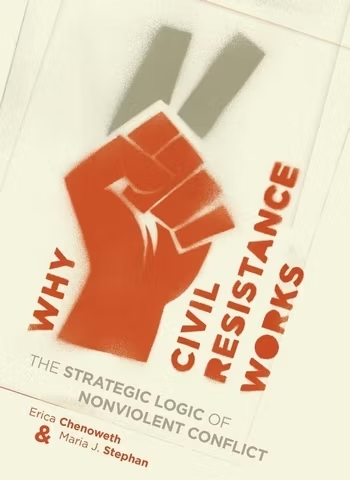
In 2008 the two scholars wrote an extraordinary article in International Security, a top line academic journal in the field of security studies that usually publishes works on military strategy, nuclear deterrence, and security policy. Their essay and subsequent book, Why Civil Resistance Works, applied quantitative social science methods to compare the effectiveness of nonviolent action and the use of military force in major political conflicts. They examined 323 historical cases over a span of more than 100 years to assess the relative effectiveness of nonviolent and violent methods.
Chenoweth and Stephan found that nonviolent campaigns were twice as successful as those which used violence as the principal means of struggle.
They also found that nonviolent methods were as successful in repressive dictatorships as in democratic regimes. It is not true, as many commonly believe, that nonviolence only works against nonviolent democratic opponents. Even in violent dictatorships, Chenoweth and Stephan found, nonviolence has been effective in bringing about substantive political change.
Chenoweth and Stephan also found that nonviolent resistance campaigns tend to result in democratic governments, while violent transitions are more likely to create authoritarian regimes. Civil resistance methods are more likely to produce a democratic society than the use of armed struggle.
This research continued with the Nonviolent and Violent Campaigns and Outcomes (NAVCO) Data Project, based at Harvard University. NAVCO is the world’s leading dataset on the characteristics and outcomes of nonviolent and violent resistance campaigns. The latest version of the database covers 627 mass mobilizations in every country in the world from 1900-2021.
Factors of success
Mass Participation
Among the factors that account for the success of civil resistance, mass participation is the most significant. “The single most important influence on a civil resistance campaign’s success,” Chenoweth wrote, “is the scale and range of popular participation.” The larger the number of participants in a mass movement, the greater its chances of success.
Undermining Opponent’s Pillars of Support & Loyalty Shifts
Nonviolent resistance often works by undermining the adversary’s pillars of political support. This depends on encouraging loyalty shifts among those responsible for carrying out repressive policies. When those charged with implementing policies begin to have doubts, they may be less willing to follow orders, and government authority begins to erode.
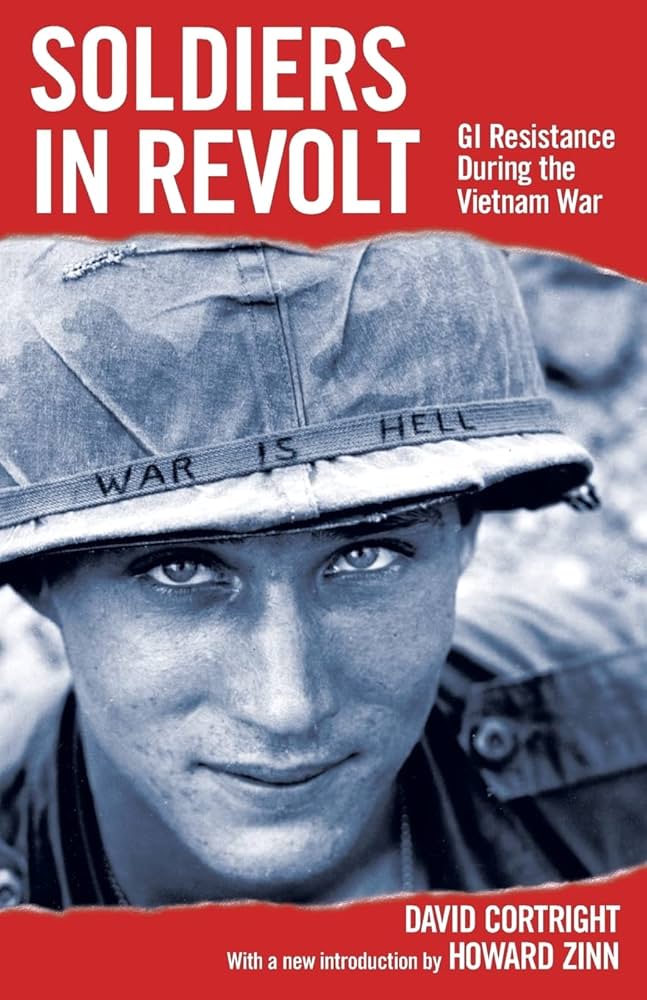
I witnessed this process unfolding when I was a soldier in the army during the Vietnam War. As the war continued, a growing number of troops opposed the war and in some cases took action to impede military operations. Soldiers on the front line sought to avoid rather than engage in combat. Combat refusals increased. Sabotage occurred aboard Navy ships. Others of us dissented by publishing antiwar newspapers on military bases and by signing petitions and joining protests against the war.
As I argue in my first book, Soldiers in Revolt, by 1970 or before, the US military in Vietnam ceased to function as an effective fighting force. When military morale and discipline eroded, policymakers had no choice but to accelerate the withdrawal of troops from Vietnam.
Effective Strategies

If the success of political struggle depends on attracting mass support and winning support from those on the other side, we need strategies that achieve those goals. This was the conclusion of the brilliant nonviolent theorist and activist Barbara Deming. Her 1968 essay “On Revolution and Equilibrium,” offers profound insights on the purpose and strategy of nonviolent action.
The effectiveness of the nonviolent method, Deming wrote, depends not on the goodwill of the adversary but on the ability of the movement to win the sympathy of third parties and undermine the political legitimacy of the adversary. She described this as the “special genius” of nonviolent action: the ability of nonviolent action to attract the support of those who were previously indifferent or opposed to the movement.
Deming emphasized the importance of maintaining control and equilibrium during a political struggle, to avoid the dizzying effects of hatred and violence. Activists must combine determined opposition to repressive policies with solicitude for the adversary as a person.
Deming referred to this as the “two hands” phenomenon: respect for the adversary as a person, combined with defiance of harmful policies. Resisters obstruct the functioning of the oppressive system but temper their personal animosity toward the adversary. “They have as it were two hands upon him—the one calming him, making him ask questions, as the other makes him move.”
Deming noted, as did Gene Sharp and other nonviolent analysts, that unjustified repression against disciplined nonviolent protesters tends to generate a sympathetic response in support of the victims. Cesar Chavez referred to this as the “strange chemistry” of nonviolent action.
When an adversary employs unjustified violence against disciplined nonviolent action , the movement benefits. When authorities are brutal against peaceful protesters, their political legitimacy and public support diminish.
The strategic advantage of nonviolent action, Deming and others have argued, is its ability to attract mass support and erode the legitimacy of the adversary. The use of violence, by contrast, is counterproductive. It may increase sympathy for the victims and turn away the mass public support that is necessary for political success.
The Battle in Minneapolis
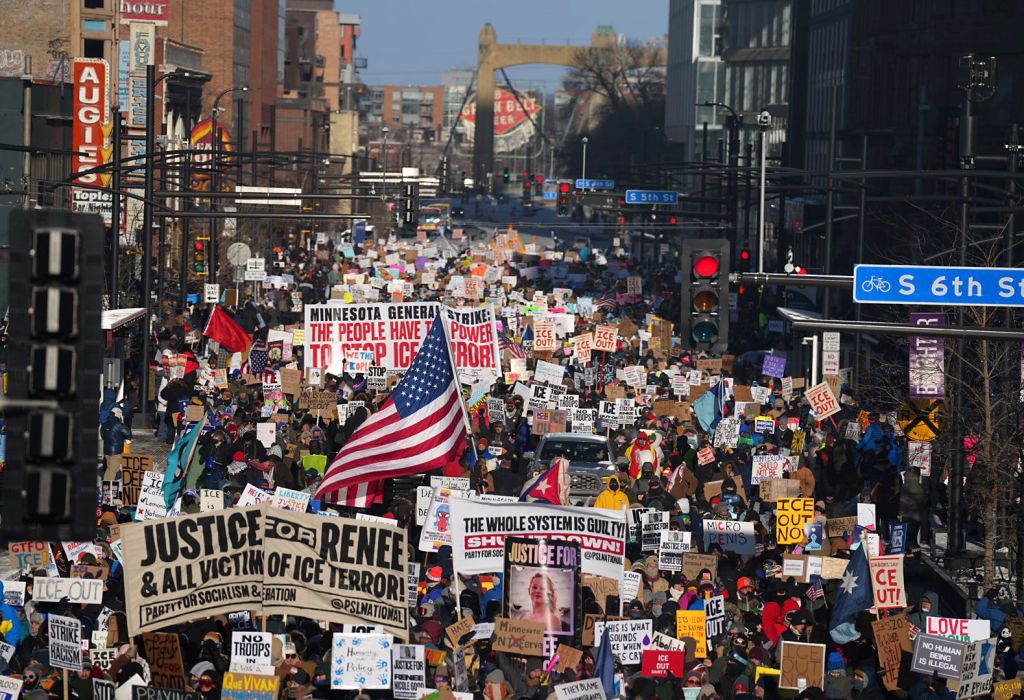
We have seen recent examples of this phenomenon at play in the response of residents in Minneapolis, Chicago and other cities to militarized federal government raids against immigrants. Thousands of heavily armed and masked ICE agents brutalized people of color, dividing families and detaining tens of thousands of people without evidence or judicial warrant.
The people of Minneapolis gave an inspiring example of courageous citizen resistance. Residents blew whistles to warn residents of approaching federal agents. They surrounded and shouted at the invaders and protected potential victims in their neighborhoods. Clergy members and community leaders organized a sit-in at the headquarters of Target to demand that the company end its complicity with ICE. Students walked out of classes. Restaurants denied entry to federal agents.
On January 23, the people of Minneapolis organized a de facto general strike. Tens of thousands stayed home from work or school or shopping. They assembled downtown in a mass rally of tens of thousands of people, withstanding sub-zero temperatures to protest ICE oppression and demand the withdrawal of federal forces from the city.
The protests in Minneapolis were remarkably nonviolent, given the severity of the occupation and ICE’s militarized methods. Residents took determined action to impede the arrests of innocent people, but they did not resort to physical violence. They remained peaceful even after ICE agents murdered local residents Rachel Goode and Alex Pretti.
Through their restraint and their refusal to be provoked into violent reactions, the people of Minneapolis confirmed the importance of nonviolent resistance as a method of change. By their determined but disciplined nonviolent opposition to ICE occupation, local residents attracted overwhelming public support for their cause, in the community and nationally.
In response ICE forces began to back off. Then on February 12 the Trump administration announced the withdrawal of ICE forces. This was a stunning victory for the people of Minnesota and for our nation. A vindication for all who believe in justice and the rule of law.

 David Cortright
You must be logged in to post a comment.