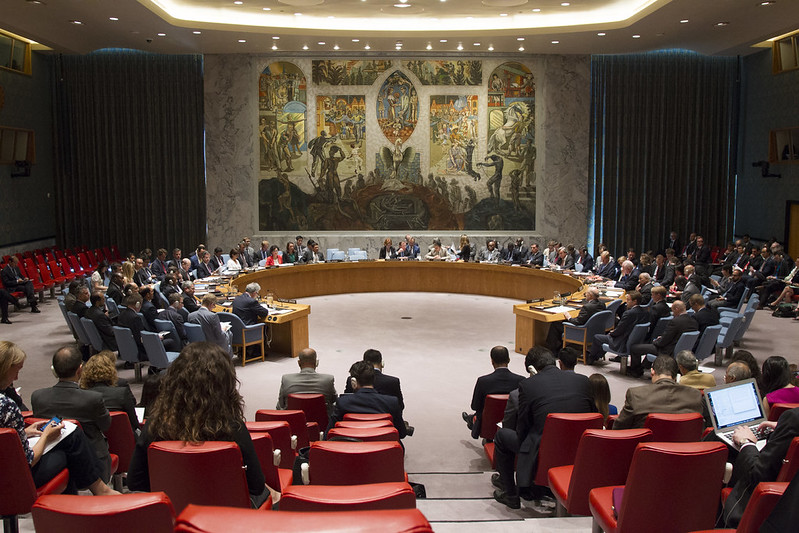
20 July 2015
United Nations, New York
The Joint Comprehensive Plan of Action was an historic agreement that established significant constraints on Iran’s nuclear program. The successful negotiations were made possible by the Obama administration’s willingness to yield on the enrichment issue, allowing Tehran to retain a limited program under strict IAEA monitoring. This was the key incentive that paved the way for the complex negotiations among the US, European states and Russia that produce the agreement.
Under the terms of the JCPOA , Iran agreed to reduce its stockpile of enriched uranium by 98 percent, shut down two-thirds of its centrifuges, significantly curtail its remaining enrichment capacity, eliminate its ability to produce plutonium, and accept the most comprehensive and intrusive weapons inspection system ever negotiated. In response to the confirmation of Iranian acceptance of these terms, the UN Security Council unanimously adopted Resolution 2231 (July 2015) lifting sanctions. The resolution created the legal framework for member states to engage in economic trade, investment, banking, and travel with Iran. The termination of sanctions was the quid pro quo that motivated Iran to accept these strict limitations to its nuclear program…
 David Cortright
You must be logged in to post a comment.