Disarmament is often dismissed as utopian and unrealistic, but there are sound security reasons for reducing and eliminating nuclear weapons.
Many former government leaders and senior military commanders have come to the realization that nuclear weapons are dangerous and unnecessary and that the world would be safer without them.
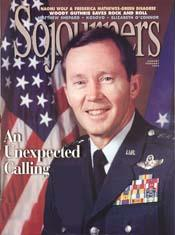
One of the most remarkable proponents of that view was General George Lee Butler, the former commander-in-chief of U.S. Strategic Command, who retired from the Air Force in 1994. He was the person responsible for launching nuclear weapons if the President were to give the order. The weight of that responsibility and his knowledge of nuclear dangers led him to advocate for the elimination of nuclear weapons.
He explained his stance in this interview for Sojourners magazine.
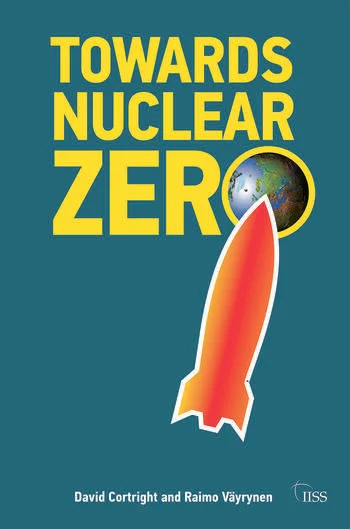
The Fourth Freedom Forum provided support for Butler’s Second Chance Foundation, which conducted public education on nuclear abolition during the late 1990s.

The case for disarmament was articulated forcefully by the 1996 Canberra Commission, chaired by then Australian Foreign Minister Gareth Evans. The Commission presented a detailed blueprint for how the U.S. and other nuclear weapons states could move in a reciprocal step-by-step fashion toward deep nuclear reductions leading to abolition. These and other studies confirm that nuclear disarmament is feasible.
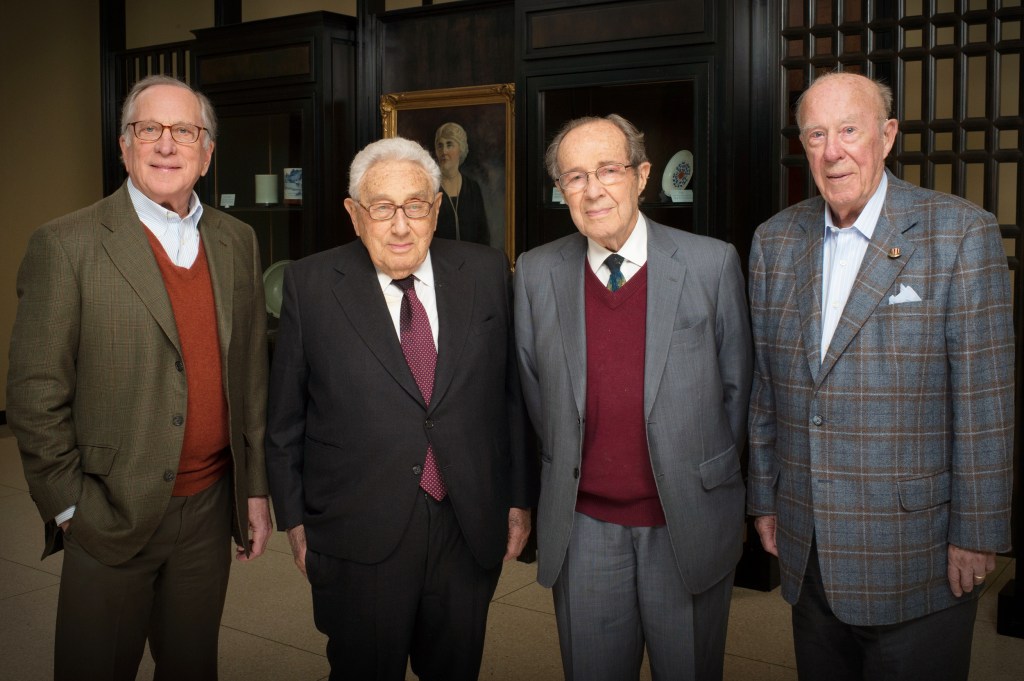
In January 2007 former Secretary of State George Shultz, former Defense Secretary William Perry, former Senate Armed Services Committee chair Sam Nunn, and former Secretary of State and National Security Adviser Henry Kissinger authored a remarkable article in the Wall Street Journal calling for the elimination of nuclear weapons. They proposed U.S. leadership in “reversing reliance on nuclear weapons globally . . . and ultimately ending them as a threat to the world.”
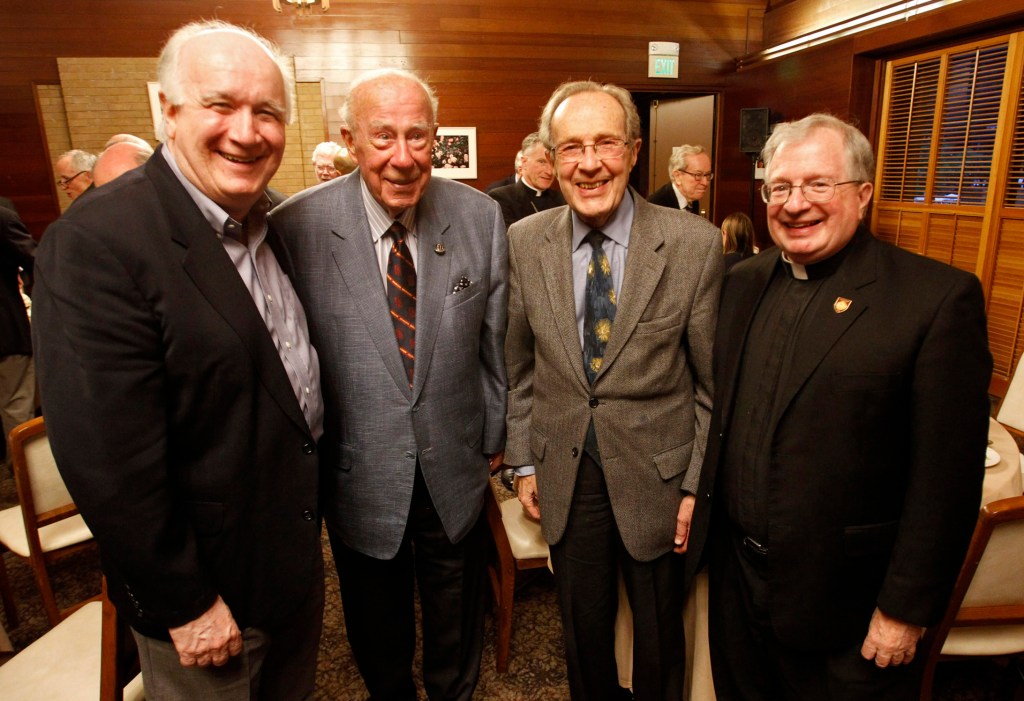
In 2014 Secretaries Shultz and Perry invited Catholic leaders and policy experts at Notre Dame and other universities to a Stanford University symposium. The goal was to revitalize Catholic engagement on nuclear disarmament.
Security Without Nukes
Nations must be able to defend against threats of aggression, military conquest, terrorism and nuclear proliferation. International relations can be nasty and brutish at times. Solutions must be found to legitimate security needs, but nuclear weapons are not the answer.

An innovative strategy for achieving deterrence without nuclear weapons was recently co-authored by Mary Kaldor of the London School of Economics.
Far from providing safety, nuclear weapons actually undermine security. As the esteemed cold war strategist Paul Nitze wrote in his final years, “It is the very presence of these weapons that threatens our existence.” The simplest and most direct solution to the danger of nuclear weapons is their complete elimination.
Although the knowledge of how to build nuclear weapons can never be erased, and the required technology and materials will always exist, it is possible to dismantle nuclear weapons and establish necessary verification systems to reduce and eliminate nuclear weapons—and to prohibit the development and deployment of such weapons in the future.
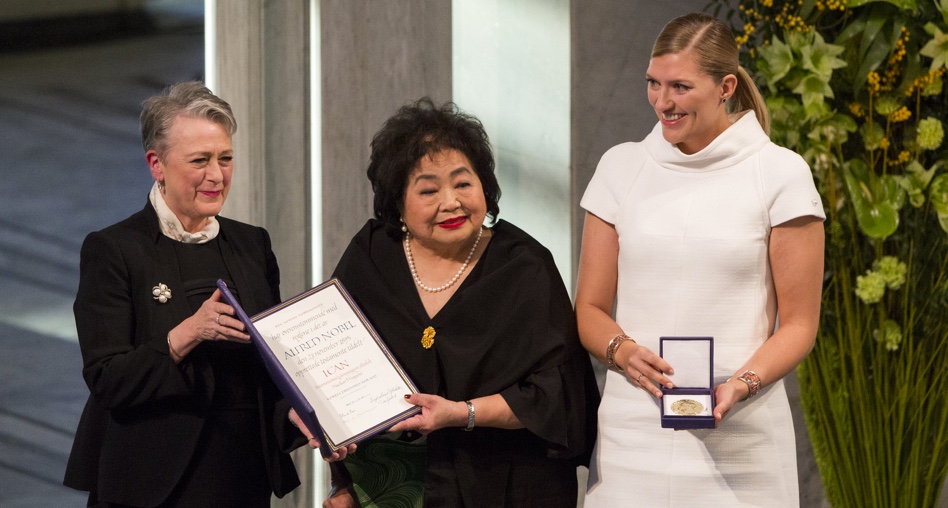
A legal framework for achieving that goal already exists in the Treaty on the Prohibition of Nuclear Weapons, adopted by the United Nations in 2017. The treaty was the result of a broadly based international civil society campaign. The TPNW has been signed by 99 countries, although the United States and other major nuclear weapons states adamantly oppose the agreement.
In recognition of that achievement, the 2017 Nobel Peace Prize went to the International Campaign to Abolish Nuclear Weapons (ICAN).


 David Cortright
You must be logged in to post a comment.