The 9/11 attacks prompted many to explore the roots of violent extremism. The UN strategy against terrorism called for addressing the “conditions conducive” to violent extremism. World leaders traced support for terrorism to “acute and appalling forms of poverty.”
Economic deprivation is a factor in accounting for conflict, but its relationship with extremism and armed violence is complex and indirect. It is not poverty per se but a general lack of economic development and equitable opportunity that is most strongly associated with armed conflict. Empirical research shows a strong link between lower levels of economic development and a heightened risk of armed violence.
Article I of the Charter of the United Nations links the goal of achieving peace and security to “solving international problems of an economic, social, cultural, or humanitarian character. “
Promoting economic development is a strategy for peace and is a primary function of governance.
The World Bank and other international development programs use the term “good governance” to describe the conditions and institutions that are most conducive to sustainable development and peace.
In the 2010s I worked with colleagues Kristen Wall at the Kroc Institute for International Peace Studies at Notre Dame and Conor Seyle at the One Earth Future Foundation in Colorado on a research project to identify the specific characteristics of good governance that contribute to peace.

We integrated research from many disciplines to examine the essential policies and institutions that are most strongly associated with peace.
We identified the following conditions as most conducive to development and peace:
- Government capacity to deliver necessary public goods and services equitably to all
- Security and public safety programs that are subject to law and subordinate to civilian authority
- Quality education that is equitably available to all groups and sectors of society
- Inclusive political, economic and social institutions and opportunities for civil society participation
- Gender equality
- Public transparency
- Mature systems of participatory representative democracy
- High levels of economic opportunity that are equitably available to all
- Open markets that are subject to regulation and progressive taxation
- A strong United Nations and effective international institutions and legal covenants for international cooperation
Good Governance
After completing the Governance for Peace book, I served as a consultant for Catholic Relief Services to help conceptualize the links between economic development, good governance and the prevention of armed conflict. CRS produced the following images as guidance for their local relief programs in developing countries around the world.
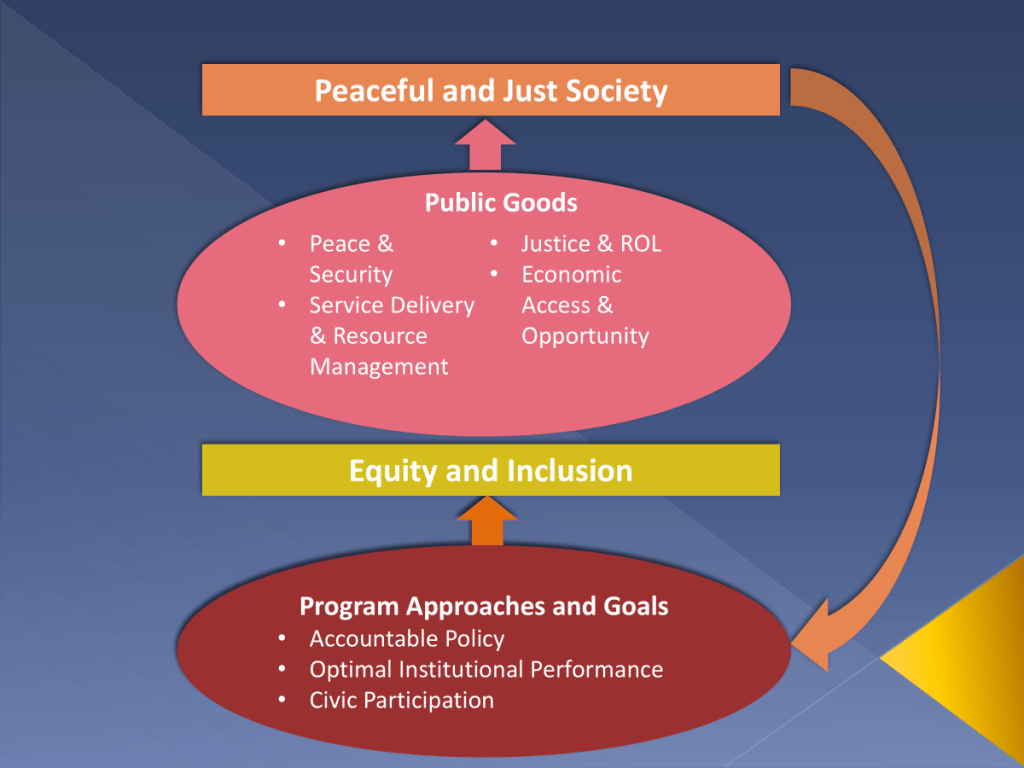
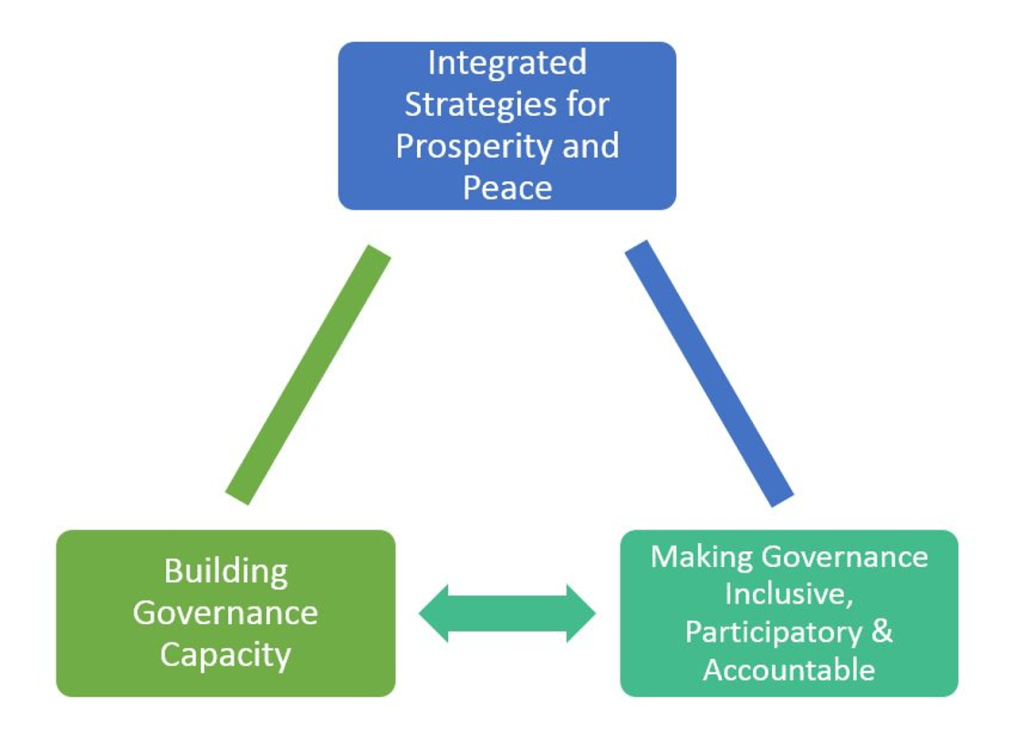
These graphics help country-based program officers see the connections between institution building and service delivery at the local level, equitable participation and inclusion among local social groups, and progress toward larger goals of peace and sustainable development.
 David Cortright
You must be logged in to post a comment.