The day after 9/11, I addressed an assembly at Goshen College, a small Mennonite school in northern Indiana. How should peace advocates respond to the terrorist attacks, I was asked.
It was risky to talk about peaceful options amidst the trauma and grief of that moment, with the fires at ground zero still raging. The mood of the country was vengeful and belligerent.
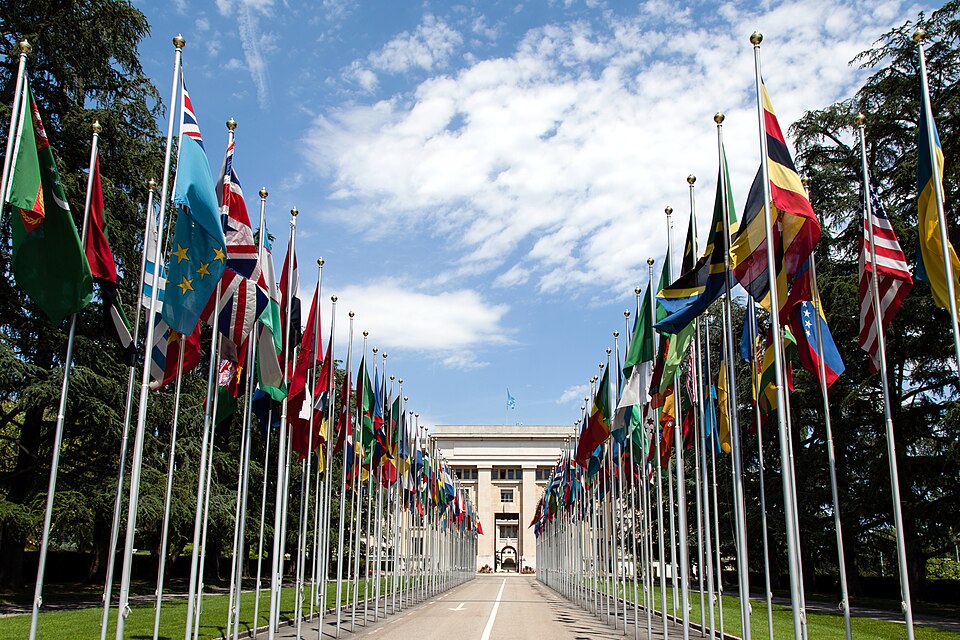
I offered prayer and sympathy for the victims of the attack. I discussed nonmilitary means to counter and prevent terrorist violence, including rigorous international law enforcement to apprehend those responsible. I advocated a greater role for the UN.
When President George W. Bush vowed “war on terror,” many of us feared this was not merely metaphor but actual policy. Many in the peace, human rights and religious communities argued that the use of military force was not an appropriate response to terrorism. We warned that war would lead to additional loss of life and produce more violence, not less.
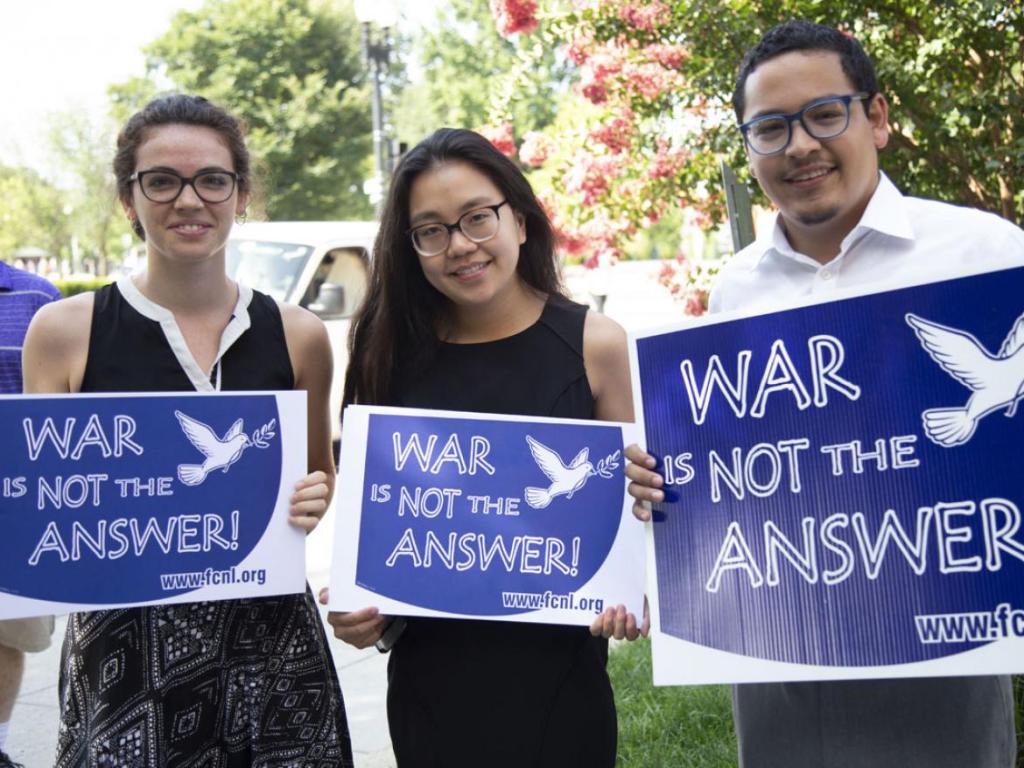
This Friends Committee on National Legislation created a message that went viral and remains popular today.
In the weeks after 9/11 Sojourners and the National Council of Churches took the lead in organizing a religious appeal for “sober restraint.” The text read “let us deny [the terrorists] their victory by refusing to submit to a world created in their image.” The declaration was signed by more than 4,000 religious and peace leaders and published in the New York Times on November 19, 2001.
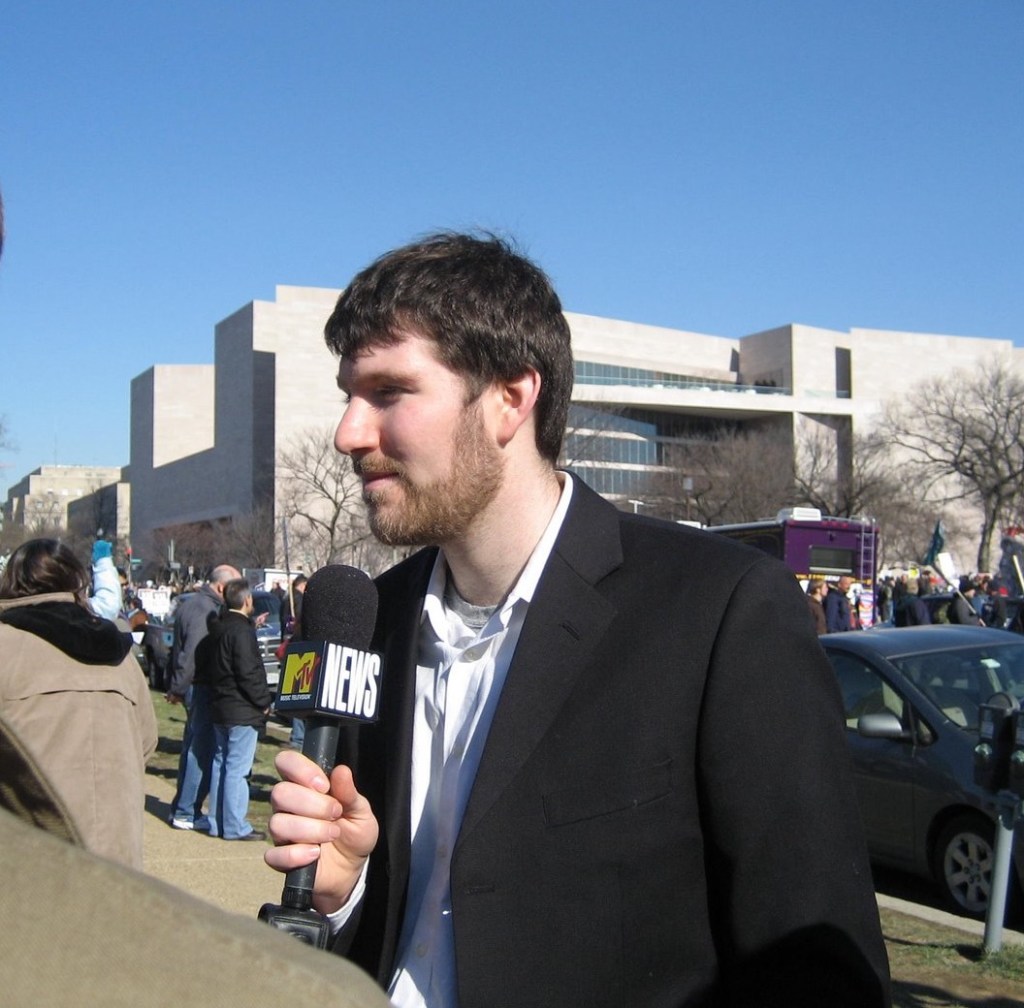
On the day after the September 11 attacks, Eli Pariser, a college graduate living near Boston, sent an e-mail to friends with a petition for multilateral police action rather than war in response to the terrorist attacks. The message was forwarded and began to spread exponentially. In the vernacular of the Internet, it went viral. Within weeks more than half a million signed the petition. Thus began the age of mass digital activism. Pariser joined forces with MoveOn to establish a powerful digital activist network that has remained active to the present.

Soon after the terrorist attacks, family members of those killed on that day formed a new organization, September 11 Families for Peaceful Tomorrows, drawing from Martin Luther King’s statement, “wars are poor chisels for carving out peaceful tomorrows.” They warned that war would generate more violence and additional innocent victims. They called for nonviolent and reasoned responses to terrorism.

The organization received encouragement and support from many peace groups and remains active today.
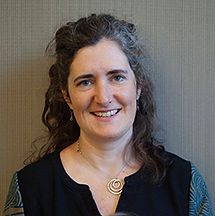
Kelly Campbell, co-founder of Peaceful Tomorrows, sister-in-law of Crag Amundson
Nonmilitary policy options
At the Fourth Freedom Forum and the Kroc Institute for International Peace Studies at Notre Dame we developed counterterrorism strategy based on cooperative law enforcement against Al Qaida and containment.
The 9/11 attackers were murderers, not soldiers, we wrote. They committed an international crime, not an act of war. The proper response is vigorous multilateral intelligence and policing.
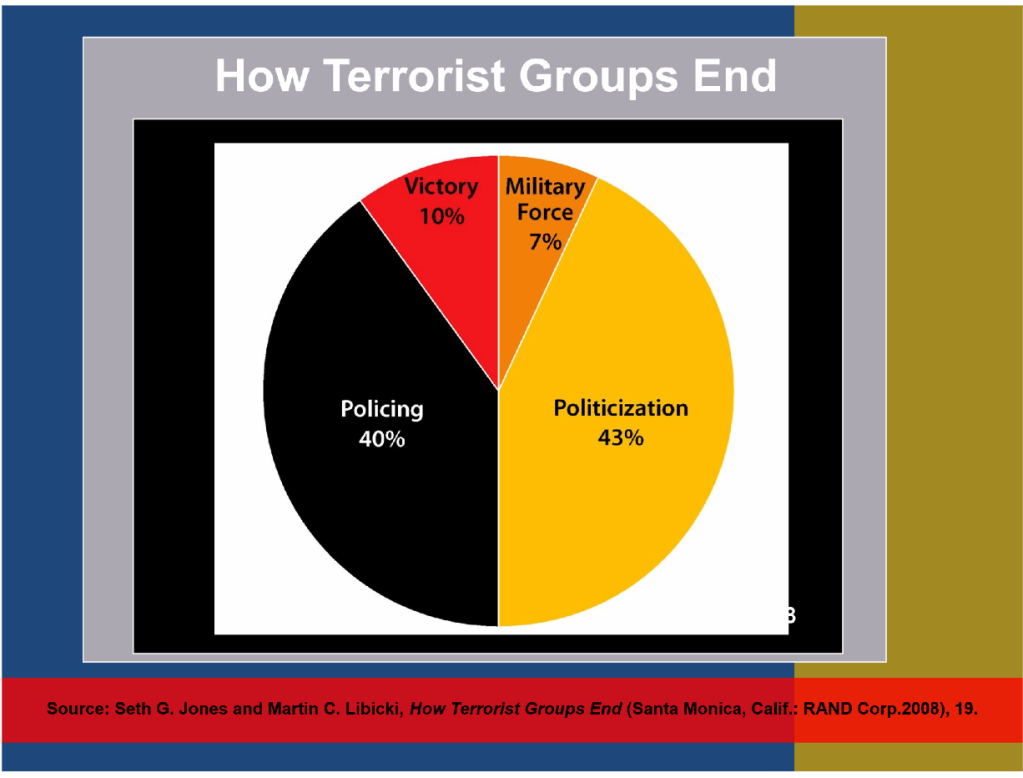
Major studies show that terrorist groups usually end through effective policing and political bargaining agreements. The use of military force and invasions often prompt a violent response and lead to greater terrorism.
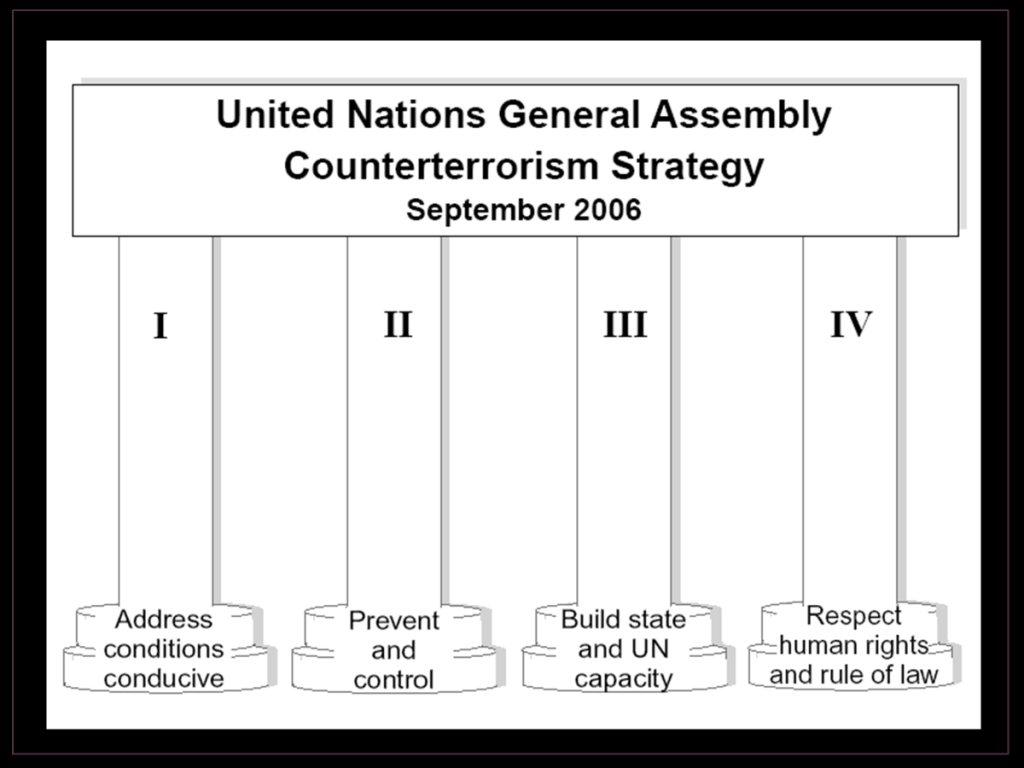
In 2003 we were asked by the head of the newly formed United Nations Counterterrorism Committee to assist in strengthening implementation of the UN counterterrorism agenda. This was a comprehensive international strategy based on four pillars.
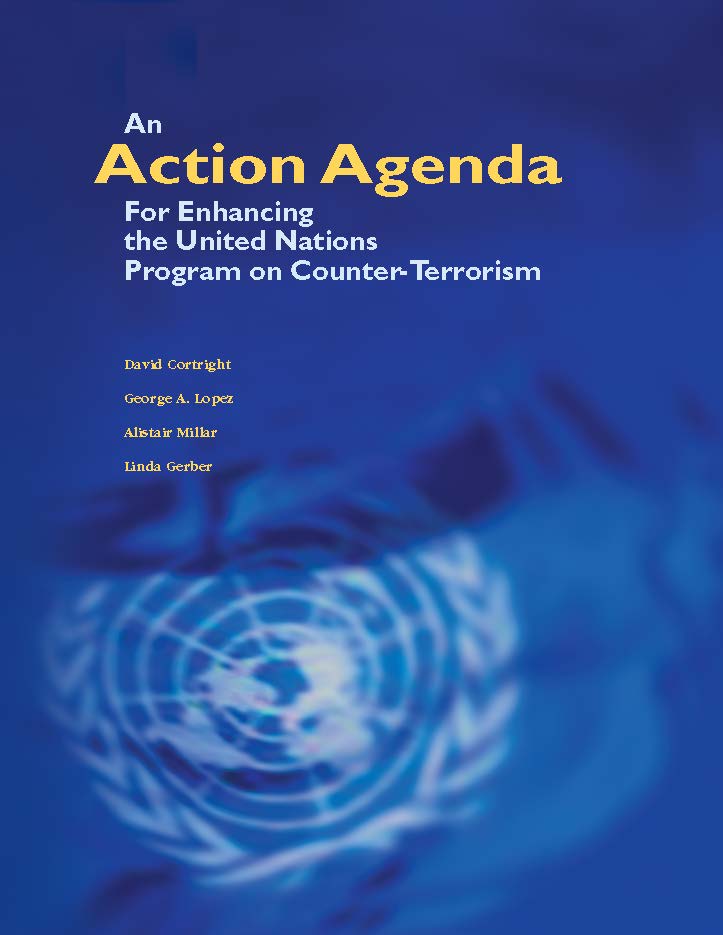
We produced a series of reports to strengthen the UN measures, including targeted financial and travel sanctions against internationally designated terrorists and their supporters. Below is one of our early reports.
The global war on terror had a chilling effect on the operational and political effectiveness of civil society organizations throughout the world. Many independent groups engaged in humanitarian assistance, development aid, human rights protection, peacebuilding, and conflict transformation found themselves targeted by repressive measures and rigid governmental controls that curtailed their ability to perform their services.
Governments often consider independent groups adversaries, but these groups help to ameliorate the underlying conditions that give rise to violent extremism.
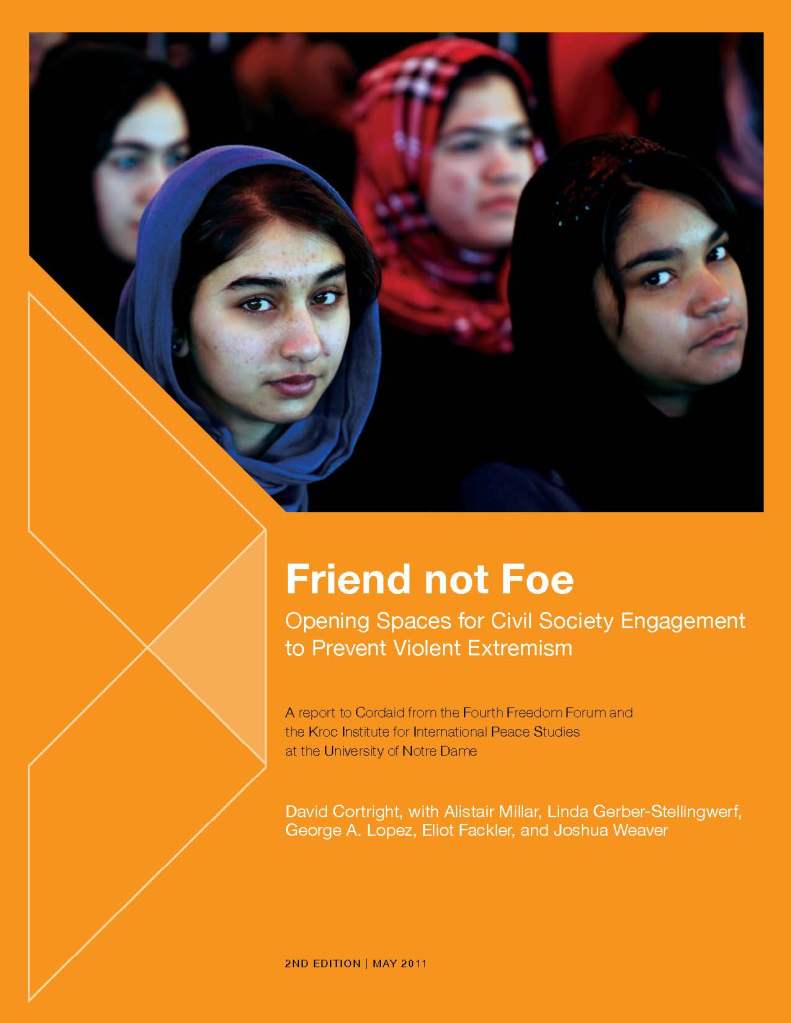
In 2008 the Fourth Freedom Forum and the Kroc Institute for International Peace Studies worked with the Dutch development agency Cordaid to produce a report on the impacts of repressive counterterrorism measures, with recommendations for protecting the ability of civil society groups to perform humanitarian and peacebuilding services.
 David Cortright
You must be logged in to post a comment.