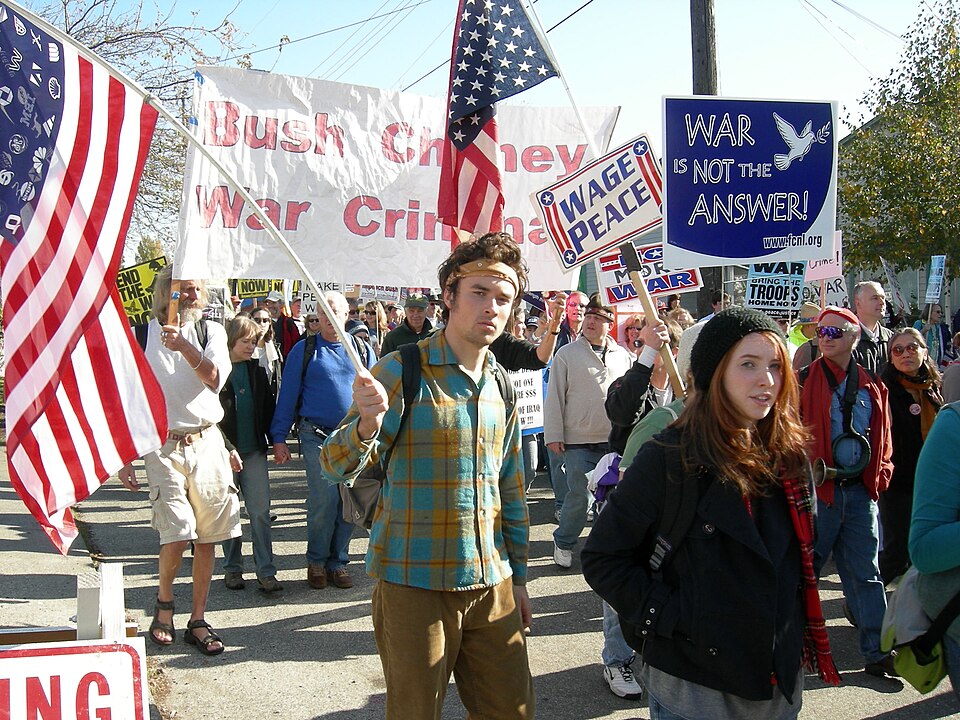
It was the largest day of antiwar protest in history, February 15, 2003, when tens of millions of people demonstrated in hundreds of cities on every continent to oppose the invasion of Iraq.
More than a million people poured into the center of London and similar throngs marched through Rome, Barcelona and other cities. Half a million people braved bitter cold and police harassment in New York.
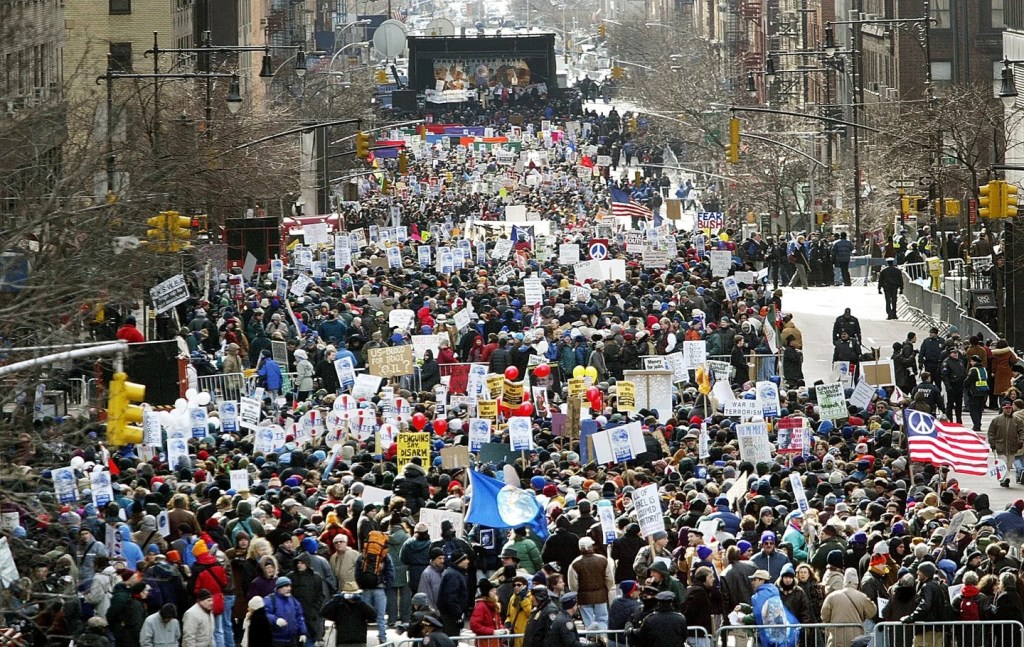
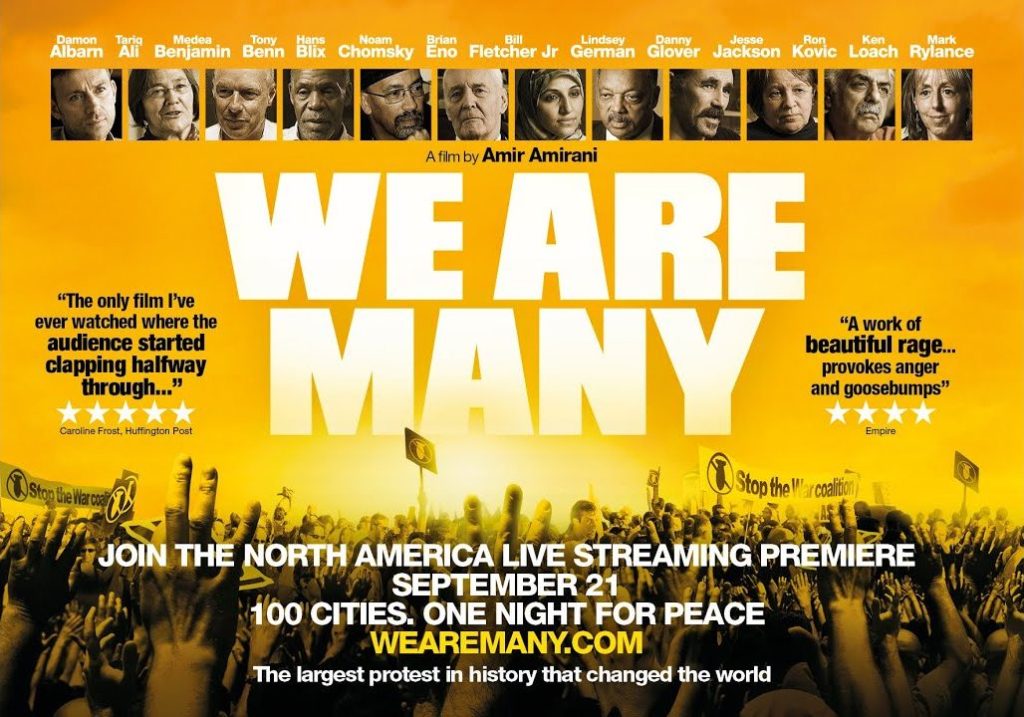
The images and hopeful spirit of that day were captured dramatically in Amir Amirani’s film We Are Many. The people of the world cried out as never before in one unified voice for peace—and yet were unable to stop the march to war.
As the countdown to war accelerated, activists organized protests and called for a broadly based national coalition. In August 2002, I wrote the article “Stop the War Before It Starts” for The Progressive magazine, arguing for a mainstream movement that could appeal to patriotic values in building opposition to war.
In October dozens of organizations joined together to create United for Peace and Justice, which cosponsored a rally of more than a hundred thousand people in Washington DC on October 26. Many additional protests occurred all over the country in the weeks prior to and after the March 18 invasion.
I worked with colleagues at the Fourth Freedom Forum, MoveOn, Women’s Action for New Directions, the National Council of Churches and other organizations to form a parallel coalition, Win Without War.

The goal was to engage mainstream audiences through professional communications and outreach to major constituency organizations. The coalition also worked closely with MoveOn to develop mass digital organizing methods.
Patriotic Framing
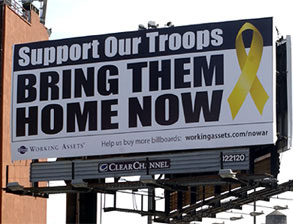
The Win Without War mission statement began “we are patriotic Americans.” This was intended to capture the flag for peace and counter the militarized patriotism that was used by the Bush administration to override objections to the use of military force in Iraq.
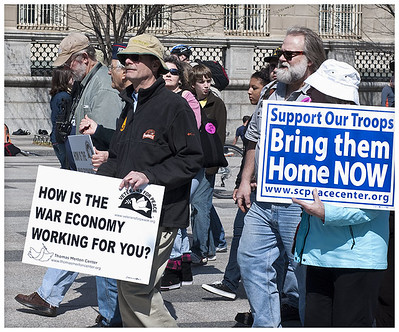
We worked with Working Assets and other groups to reframe the “support the troops” trope.
Students in my class at Notre Dame proposed the slogan “Support the Warrior not the War.”
The Case Against War
The Fourth Freedom Forum and other research groups generated research reports refuting the case for war and identifying alternative security strategies. Among the reports were the following:

Contested Case: Do the Facts Justify the Case for War in Iraq?
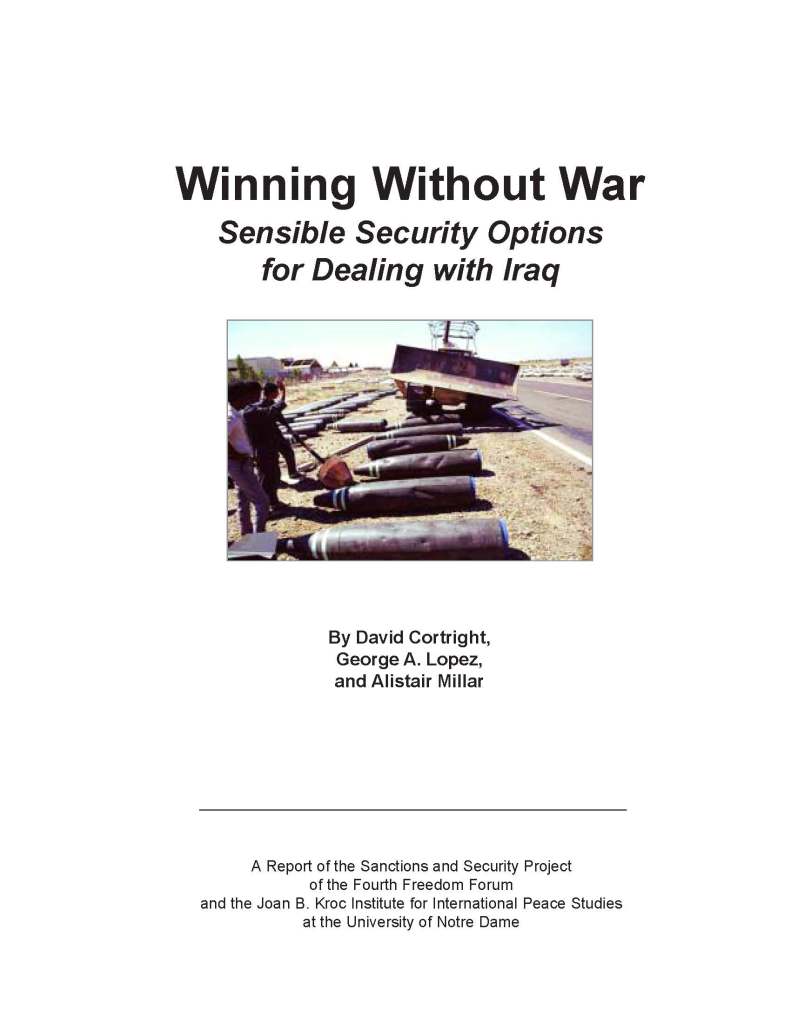
Winning Without War: Sensible Security Options for Dealing with Iraq
George Lopez and I wrote a lengthy article for Foreign Affairs which explained that war was not necessary because UN weapons inspections and targeted sanctions had eliminated the threat of weapons of mass destruction in Iraq.
Protest to Policy
Activism continued in the United States after the invasion, although on a smaller scale. The focus of attention shifted from protest in the streets to engagement in elections and lobbying. Democratic Party candidates spoke out against the increasingly unpopular occupation of Iraq and used the issue to win significant victories in the 2006 midterm election.
Activists saw the congressional elections as an opportunity to turn the tide against the war, and antiwar energy poured into electoral organizing and lobbying.
The November vote that year was a huge victory for the Democratic Party and a turning point in the politics of the war. Democrats picked up 31 seats in the House of Representatives and six in the US Senate, enough to win both houses of Congress for the first time in decades.
Opinion polls showed that Iraq was the decisive issue for prospective voters. It was the “Archimedean lever” that turned the election. Activist engagement helped to make that possible.

When Bush ignored the election results and ordered a surge of more troops to Iraq, the Service Employees International Union, MoveOn and other groups formed a new coalition Americans Against Escalation in Iraq. Activists lobbied in 2007 for legislation setting a timetable for the withdrawal of U.S. troops.
The coalition against escalation organized an “Iraq summer” campaign to mobilize support for antiwar legislation in dozens of swing districts.
With their constituents demanding change, members of Congress approved a timetable for removing troops from Iraq. That legislation was approved three times in 2007, but Bush exercised his veto and Republicans prevented the measure from becoming law. The concept of a timetable gained legitimacy, however, and in 2008 Bush himself approved a scheduled for withdrawal in negotiations with Iraqi government officials.
In 2008 activists mobilized to support the candidacy of Barack Obama, who won the Democratic Party nomination on the basis of his unequivocal opposition to the war. Activist support made that possible.
As President, Obama followed through on his pledge to withdraw, with the last troops leaving in 2011.
Obama was no peace candidate, and never promised to be, but on the issue that mattered most, ending the war in Iraq, he was true to his word.
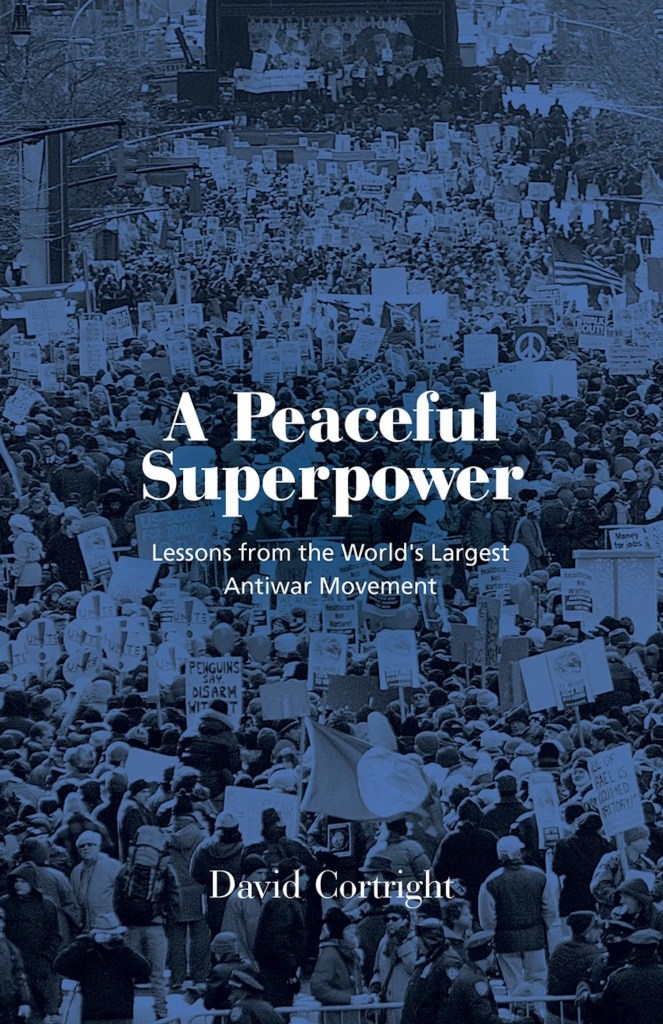
I analyze the development of antiwar protest and its impact on policy in my book A Peaceful Superpower.
 David Cortright
You must be logged in to post a comment.