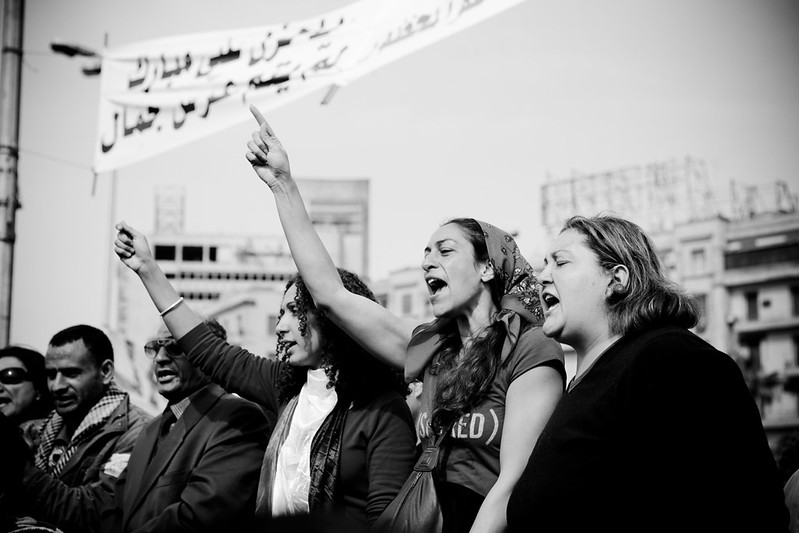
Today I spent several hours with a group of students from Cairo University who were actively involved in the uprising. Four men and three women, all in their twenties—those who made a revolution.
I asked the women about gender relations during those extraordinary days.
In Egyptian society, one of them remarked, relations between men and women are ‘not positive.’ Another put it more bluntly: ‘we are always being hassled and harassed.’
During the revolution, though, a miraculous transformation occurred. Men were more considerate, and
women could participate freely without being harassed.
One woman described her experience on the terrible night of January 28 in Tahrir Square, when dozens of protestors were killed and she herself had been knocked down and injured. At 3 in the morning, tired and aching, she searched for a ride home. A young man offered to help. He put her in a car with three other guys and drove her home. No hassles, only caring support.
‘Something like this never would have happened before.’
A few nights later in the Square she and a female friend were wearily looking for a place to sleep. A young man escorted them to a nearby building. He made a place for them to sleep and stood outside the
whole night to make sure they were protected and undisturbed.
‘It was like a miracle,’ she said. ‘The only time in my life I felt this secure in public was during the pilgrimage to Mecca.’ The whole spirit of those days was like the hajj, she said. Gender differences and biases melted away as young men and women devoted themselves to the common cause of winning freedom.
Can it be that nonviolent revolution is like a religious pilgrimage, an extraordinary giving of self to serve others, to achieve a transcendent purpose?
More than one person has described what happened here as a ‘revolution of love,’ a collective act of
selfless sacrifice and compassion for the nation, to help people achieve a better future together.
Originally published June 9, 2011
 David Cortright
You must be logged in to post a comment.